
- News
- City News
- chennai News
- In a tryst with tribals, sculptors find a groove
Trending
This story is from January 6, 2021
In a tryst with tribals, sculptors find a groove
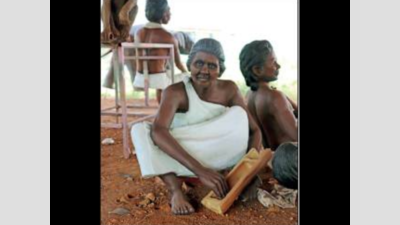
The sculptures of tribal people of the Nilgiris are to be installed at a proposed tribal ecovillage near the Sathyamangalam Tiger Reserve in Erode

A group of 12 artists has been working on sculptures of tribal people of the Nilgiris to be installed at a proposed tribal eco-village near the Sathyamangalam Tiger Reserve (STR) in Erode. The team, headed by sculptors Karthikeyan and P V Prabhakaran, has finished more than 60 sculptures of people belonging to various tribes such as Paniya, Kattunayaka, Irula, Kurumbha, Kota, Toda and Oorali. To get the exact feel of their lives, the artists stayed with the tribal people in their homes for more than two weeks.
Started in October 2019, the project is an initiative of the Tamil Nadu forest department and the STR. "Travelling and staying with the tribal people in the hamlets helped us know more about their daily lives and age-old practices. We spent at least two weeks with people belonging to various tribes in their hamlets," said Prabhakaran.
The 15-acre tribal eco-village in Karachikorai village near the Sathyamangalam Tiger Reserve in Erode will create awareness among people about the rich tribal lives, their customs, daily lifestyle, food, handicrafts and languages. "We used to sit with the tribal people and talk about their way of living. We even recorded their voices. Initially, they were initially hesitant to interact" he said. Communication wasn’t easy. "Even though they live in the Nilgiris, none spoke proper Tamil. Their language was a mix of Tamil, Kannada and Malayalam," said Karthikeyan.
The life-size sculptures are first made in clay and molded into plaster of paris and then converted into fiber. "Each one is different when it comes to physical features. The Paniya people are shorter so we sculpted them as it is. We had to observe the physical as well as stylistic aspect of each one closely," said Karthikeyan. Even though the team has finished more than 60 sculptures of the 65 planned, a 25ft piece encompassing all tribes in cement is left.
What disappointed the team was the sudden shift in the lives of these hill people due to technological advancements. "Their traditional lifestyle is transforming. Their ornaments and attires have undergone drastic changes. We had to collect some old photographs for the traditional sculptures," he said.
End of Article
FOLLOW US ON SOCIAL MEDIA










Hot Picks
TOP TRENDING
Trending Stories
In City
Entire Website
- Meerut Metro: India’s ‘Fastest’ Metro Service Unveiled! Check Top 10 Features, Stations, Route & More
- Several people feared trapped after house collapses in Delhi's Karol Bagh
- 'Putting an end to all the masala': Virat Kohli and Gautam Gambhir leave fans stumped
- Massive tech layoffs at Apple, Dell, IBM are a wake-up call for IT professionals: Why upskilling is the key to survival
- 'Biggest security breach': 1000s of pagers explode across Lebanon, many Hezbollah fighters hurt; 9 dead
- Maharashtra schools closed on Sep 18: Here’s why
- Schools to be closed tomorrow in these states: Here’s why
- 'Prophet Muhammad who taught us to...': Pakistan batter Babar Azam turns to faith amid poor form
- Sukanya Samriddhi Yojana: What are the latest guidelines for SSY accounts? Check here
- How Israel's Mossad turned everyday pagers into deadly weapons against Hezbollah
- Gaganyaan tracking station site finalised at Cocos Islands
- Iran accuses Israel of 'mass murder' after pager explosions in Lebanon
- Why Bengal doctors not going back to work after talks with Mamata
- 'Subah bheege badam khate ho?': Virat to Gambhir
- Why was Hezbollah using outdated pagers in 2024?
- 'God protect Delhi': Swati Maliwal ups ante against Atishi; makes new claims
- Does India wish to disappear like Indus valley civilisation once did?
- Fired techie shares his 'survival story' on LinkedIn, post viral
- Yashasvi inches closer to overtaking this legend
- 'Undercover' cops crack temple heist, arrest robbers dressed as women

Popular Categories
Hot on the Web
Top Trends
Vince McMahonNPS Vatsalya LaunchDonald TrumpKolkata Doctor Rape CaseShreyas IyerTaiwan PagersGautam Gambhir Press ConferenceUGC Net ResultVirat KohliSukanya Samriddhi YojanaIsrael Hezbollah WarNEET UG Admission CriteriaDelhi CM's ListPager Attack in LebanonIndia Fastest Metro ServiceTech LayoffsLive Cricket Score
Trending Topics
NayantharaLuxury BrandBaby HippoKhatron Ke Khiladi 14Chinas EggAtishi Marlena Singh QualificationSunita AhujaGoat CollectionSalman Khan FarmhousePitra Paksha 2024CheetahsKangana RanautAditi Rao HydariDalljiet KaurHoliday DestinationVikas SethiBest Selling Earbuds Under 1000Apple iPhone 16 ProVirat KohliWordle Answer
Living and entertainment
Latest News
Throwback: When Aishwarya Rai said that dignity is 'extremely precious' to her; 'The way I have been brought up.....'Shilpa Shetty just rolled out the latest sari trend 'a rainbow sari''Could restore sight': FDA grants 'breakthrough status' to Musk’s Neuralink 'Blindsight' implant. What it meansCM Punk to Step In as Guest Referee for NXT Title Match at WWE NXT Chicago EventWaterborne disease cases spiked after flood in VadodaraThe man who wants to 'cancel' Adani from Sri LankaSuriya to play the antagonist in 'Dhoom 4', here's what we know11 get new lease of life with organs from two in SuratMrBeast aka Jimmy Donaldson, Amazon sued by ‘Beast Games’ contestants over sexual harassment and chronic mistreatment allegations - reportsAmazon India appoints new country headBigg Boss Tamil 8: Actress Sachana Namidass to participate in the upcoming season?India 'very big abuser' of trade ties with US, says Donald TrumpJr NTR's 'Devara: Part 1' to have early morning showsGrieving mom's heart-wrenching letter blames toxic culture for daughter’s deathRicky Ponting is new Punjab Kings head coachA lot at stake as Mohun Bagan get ready for Asian footballHeart problem? Smart stetho can sense it in just 15 secsWhy am I feeling irritable? Common causes of mood swings and how to manage them
Copyright © 2024 Bennett, Coleman & Co. Ltd. All rights reserved. For reprint rights: Times Syndication Service